
Importing 2d CAD files as modeling reference
ByIn a nutshell: use Autocad12 ASCII DXF format to get 2d data from dwg files into Blender 2.58 using free software Draftsight or Autodesk online dwg tool if you do not have Autocad.
The long story:
Blender importers have kept changing over time. At the time of writing this article I have tested Blender 2.58 and the imported formats I could find useful in this matter are .3ds .dxf and .svg
The most used format in the architectural world remains DWG files from Autocad, and as Blender does not import dwg you’ll have to have an intermediate software to view edit and export your files.
Of course you may ask the client for a dxf export of the file but this doesn’t look professional, you can’t clean the file yourself and if revision files follow, it will be unpleasant for the client to keep converting them for you.
If you have Autocad it will be really easy. I have a cheaper commercial alternative, Bricscad, good but lacks 3ds export (at least my older version does) so I tried dxf export. I managed to bring a nice mesh from my 2d drawings using the Autocad12/13 ASCII DXF format.
Well, the good news is you can do the work using free software. It was a bit tricky but after two days of googling and testing I have found a nice free 2d cad drafting software called Draftsight that can be used to open dwg files, edit them and export to autocad 12 ASCII DXF. It is not open source and you have to submit an email address but was easy to download and install. All 2d editing commands are the same as in Autocad.
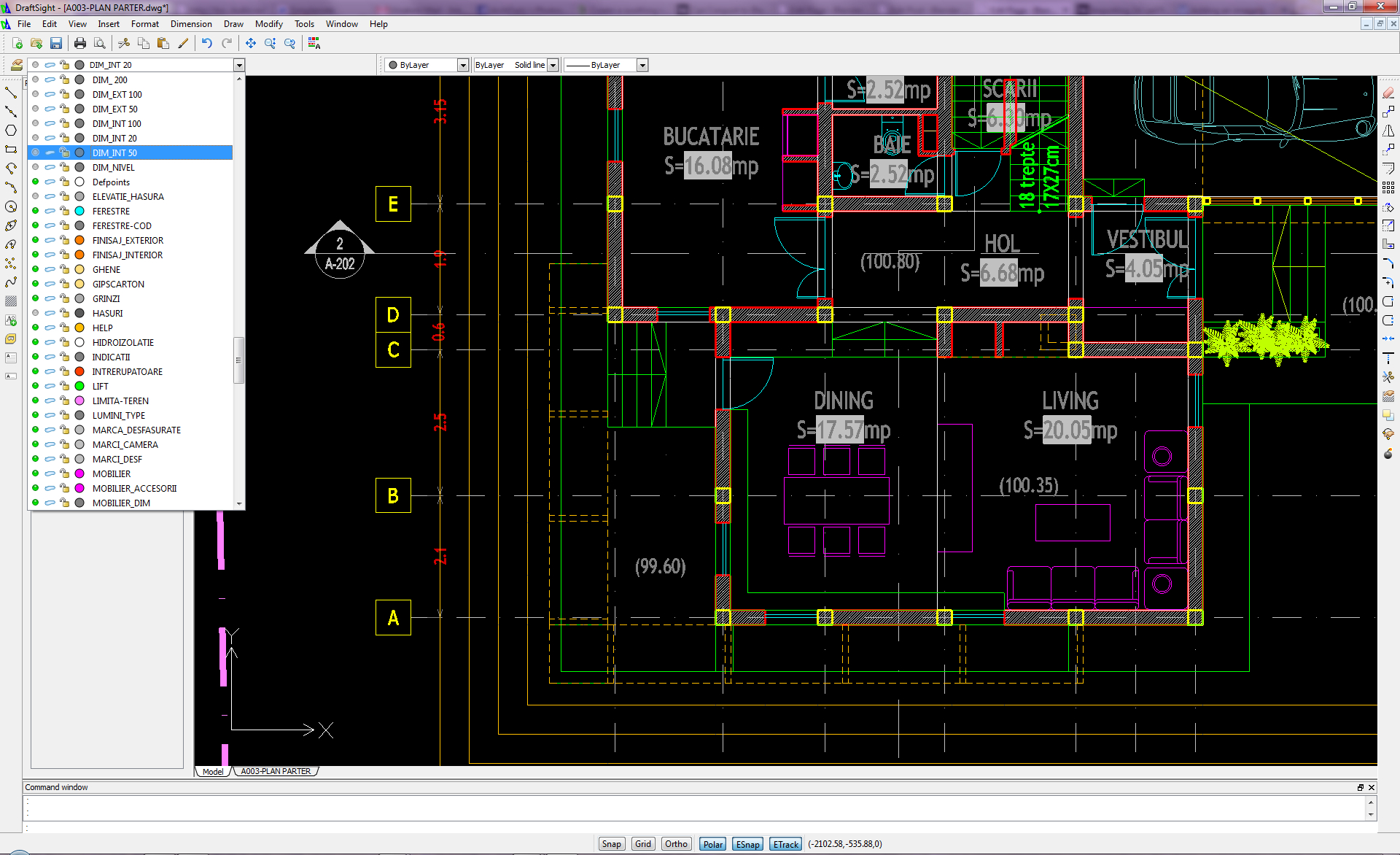
..
An open source similar cad software I found, Librecad, might work also but did not open dwg files, just dxf and seemed slow.
You can also try using this Autodesk online dwg tool, it does open dwg and save dxf only the editing options are a bit simple and slow to use so you might not be happy to use it on a complex file. You also have to create an Autodesk account for this.
If all you need is to view the dwg files, print them or take sceenshots you can use Autodesk dwg viewer.
I am rather surprised I didn’t find more free options, do you know some other free cad- dxf editors/exporters?
Importing 2d data to Blender as actual meshes can help a lot but requires a bit of preparation work. I have sometimes received really untidy cad files, so here are some things you should check before exporting:
- delete unnecessary stuff from files like cars and tree blocks. zoom to bounds (extents) to check for out of sight versions of the plans, lost points or dimension lines.
- delete text, hatches and explode blocks or freeze layers containing them. Then select all and explode. Sounds harsh but I received files that had blocks in unexpected places, on wrong layers. Some elements can change color as they might move to layer 0 but it doesn’t really matter.
- the imported object will not retain the different line colors usually used in cad drafting so better delete unnecessary elements which will make reading the plan confusing
- scale drawing to desired units (meters work well with Blender units)
- check if drawings have not drifted somewhere far away from origin and move them close to 0,0,0 or else you might have trouble finding it in Blender
- to make sure nothing has escaped, select the cleaned drawing and use the wblock command. This will save a new file containing just the selected entities
- if cad files are too messy or big and fail to import them correctly, consider drawing over a simplified outline with the main features you need for construction, and exporting just that.
After submitting the file to all of the above and saving the r.12ascii dxf file I went to Blender:
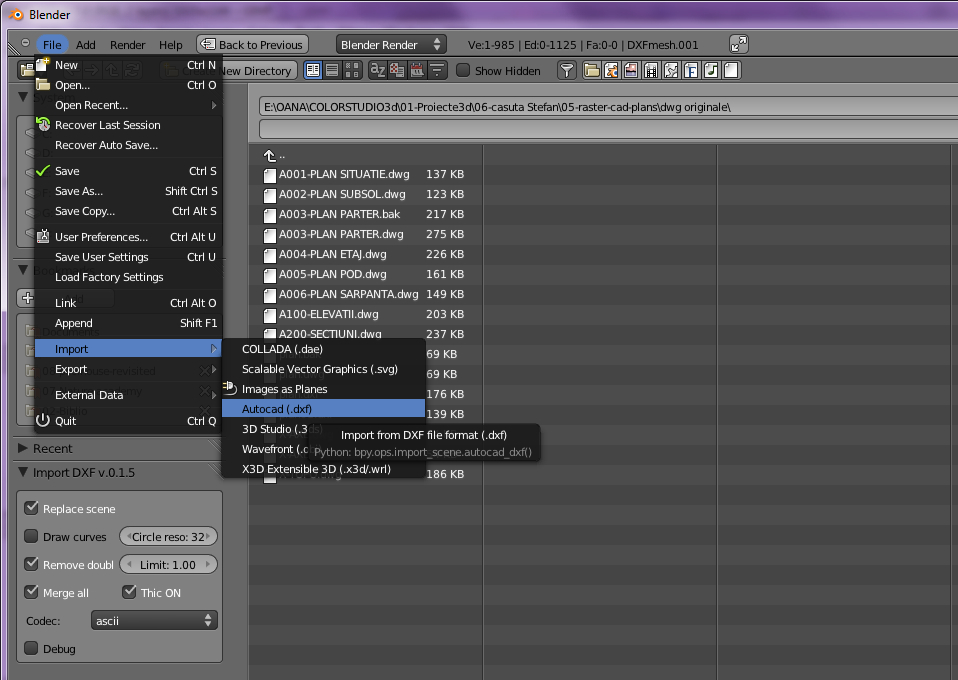
And got the following editable object, just vertices and edges, all one piece, all blender black:
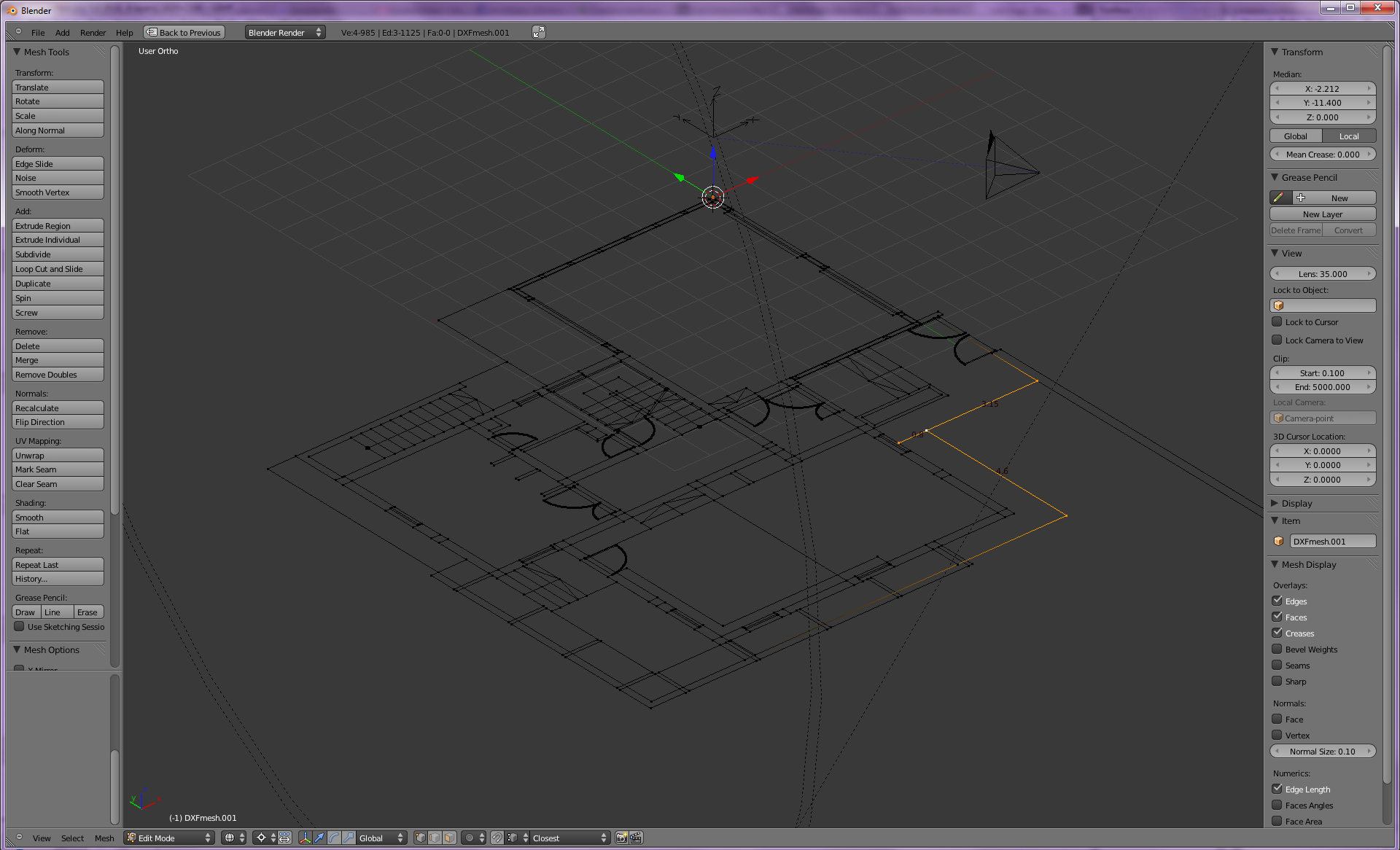
By enabling edge length to display in edit mode I could check the drawing was imported to scale.
….
Last tested in official 2.61 Blender release, worked as described above. Import as dxf addon must be checked first in the addons section in User preferences. One glitch: didn’t work importing in the file I was already working on, not only did not import occur but some objects in file disappeared. Imported OK in a new file, then used append.
-
Carolyn Roberts
-
Mantas
-
Oana
-
YU
-
rudolf
-
rudolf
-
Oana
-
rudolf
-
Will
-
Oana
-
Will
-
Oana
-
migius
-
Oana
-
melriv28
-
melriv28
-
Oana
-
Sabri
-
Brook
-
Milind

